



Planning Management

Planning Management
Planning management is the least glamorous stage of a project, but perhaps the most important.
This is the stage where decisions are made that will affect everything that happens later: schedules, budget, quality of execution – and especially the number of problems that will arise in the field.
In practice, projects do not fail on the construction site.
They fail much earlier – at the planning table.
What is planning management in construction and infrastructure projects?
Planning management is a process aimed at leading the planning stage in an orderly, coordinated, and controlled manner – from the concept to the implementation plans.
The process includes:
- Coordination between consultants and planners
- Managing versions and plans
- Meeting schedules
- Compliance with regulatory requirements and standards
- Linking planning to actual implementation needs
Proper planning management is not just about “putting out plans,” but about ensuring that the plans are feasible, coordinated, and will prevent costly mistakes later on.
Why has planning management become such a complex challenge?
In the past, a project would involve a limited number of consultants and plans.
Today, the reality is completely different.
A typical project includes:
- Dozens of consultants
- Hundreds of documents and plans
- Frequent changes
- Overlap between planning and execution
- Constant pressure to meet deadlines
When there is no organized planning management, chaos ensues:
Outdated plans, contradictions between disciplines, lack of documentation, and missed decisions.
Planning management = risk management
One of the key roles of planning management is risk reduction.
Every uncoordinated plan, every undocumented change, and every decision that is not communicated to the relevant parties
is a direct risk to the project.
Professional planning management enables:
- Early identification of conflicts
- Addressing changes before going into the field
- Reduction of repetitive work
- Maintaining workflow continuity
In simple terms: fewer surprises, more control.
The connection between planning management and field execution
One of the most common mistakes in projects is a disconnect between planning and execution.
The plans are “out,” but:
- The field works on old versions
- Changes are not implemented in a timely manner
- There is no match with the reality in the field
Advanced planning management does not end with the production of plans – it accompanies the project during the execution stages as well, ensuring full synchronization between the office and the field.
When planning is connected to execution:
- Decisions are better
- Execution is more accurate
- and quality is maintained throughout
Planning management, control, and quality assurance
Quality planning management cannot exist without control and quality assurance.
Plans are not just documents – they are the foundation upon which the entire project is built.
Therefore, it is important to ensure that they:
- Comply with standards
- Coordinated between all disciplines
- Approved by the relevant authorities
- Documented and controlled
Combining planning management with control and quality assurance processes allows errors to be identified at the planning stage – rather than after they become costly problems on site.
Why are Excel and email no longer sufficient?
There are still projects that manage planning using:
- Email chains
- Local files
- Manual tracking tables
This method may have worked in the past, but today it results in:
- Lack of transparency
- Human error
- Duplication
- Wasted time
Modern planning management requires a single system that centralizes all information, updates, and approvals in one place.
An online system for control and quality assurance as a planning management tool
This is where an online system for control and quality assurance comes into play.
Such a system enables:
- Organized management of plans and versions
- Documentation of changes and decisions
- Digital approval rounds
- Connection between planning, quality, and execution
- Continuous work between the office and the field
For planning managers, this is a quantum leap:
Less chasing after information – more real management.
Organizational-level planning management
In organizations that manage multiple projects simultaneously, planning management is not just a project issue – it is an organizational one.
Smart planning management enables:
- Standardization of processes
- Improve planning quality over time
- Performance analysis and comparison between projects
- Data-driven decision making
When every project is managed using the same method, the entire organization gains knowledge, experience, and control.
The future of planning management
The future of planning management lies in full digitization, transparency, and connectivity between all stages of the project.
Advanced planning management:
- Doesn't wait for problems – it prevents them
- Doesn't work retroactively – but in real time
- Not based on feelings – but on data
Organizations that understand this find that proper planning management saves money, time, and headaches – long before going into the field.
In conclusion
Planning management is the decisive factor in any project.
This is where the level of quality, risk, and certainty is determined.
When planning management is carried out in a controlled, coordinated, and digital manner – alongside quality control and assurance the entire project is managed in a smarter, more predictable, and more successful manner.
Vi-Soft is a leading software house that has been providing technological solutions to the construction and infrastructure industry for over 10 years.
We are proud of our team of engineers, consultants, developers, software testers, and product managers – all focused on one thing: providing the right solution for every project.
Want to see how it works in practice? Fill out the form and we will be happy to give you a personal demonstration.
what our customers say
Real experience speaks louder than anything else. Read authentic feedback from professionals who work with our system every day and see the value it brings to their projects.


Mobile Innovation at Your Fingertips
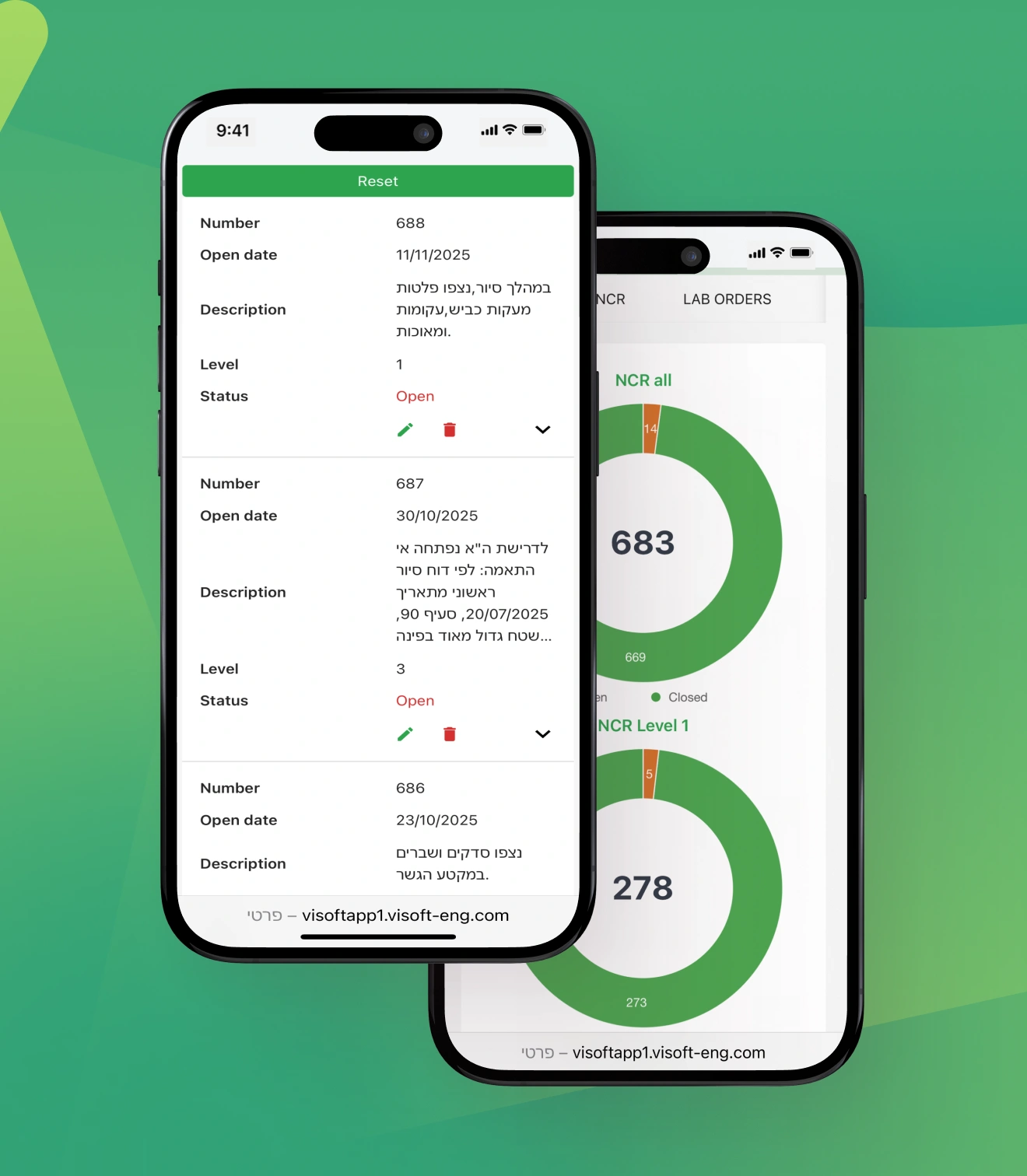
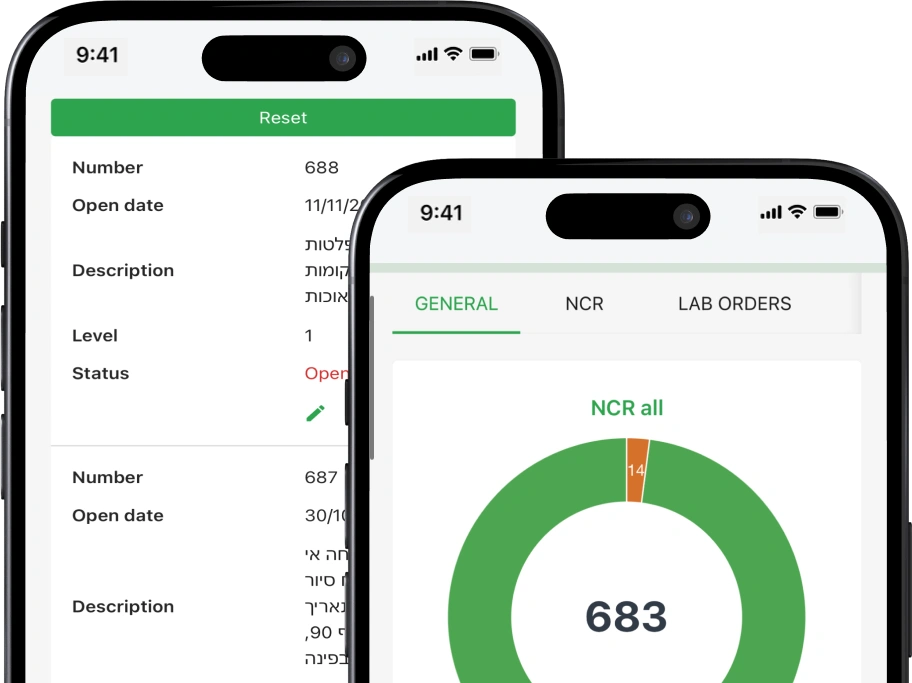
- Conduct inspections on-site, even offline.
- Attach photos, comments, and signatures instantly.
- Sync data to the cloud once online.


our clients