Reports and Analysis
Construction projects are complex, and infrastructure is complicated – but managing them doesn’t have to be uncertain.
Every successful project relies on accurate, clear, and accessible information.
This is where reports and analysis come in, the key tool for project managers who want to understand, control, and improve what is happening on the ground in real time.
Why are reporting and analysis essential for project management?
Reports and analysis allow us to see the big picture, understand trends, and identify problems before they develop.
Through reports, the project manager receives:
- A complete overview of project progress
- Financial indicators and schedules
- Task status, work logs, and defects
- A link between planning and actual execution
The ability to analyze information in real time is the difference between a predictable project and a stressful project, where decisions are made “based on gut feeling.”
Reports as a basis for control and quality assurance
Quality management is not just a superficial check-it is based on data.
This is where reports and analysis come in as an integral part of quality control and assurance.
Through reports:
- Trends in defects can be identified
- Track the handling of existing defects
- Ensure that all corrections are documented and implemented
- Create complete transparency for all parties in the organization
In other words, reports become a driving force, not just a means of documentation.
Key types of reports in projects
Every project has its own reports, but there are a few key ones that project managers cannot do without:
- Progress reports – show what has been done, what is about to be done, and what is behind schedule.
- Quality reports – include the status of defects, quality checks, and compliance controls.
- Risk reports – identify potential problems and highlight the most significant risks.
- Organizational KPI reports – enable comparison between projects, insights into processes, and guidance for optimization.
Each report is not just a set of numbers – it is a decision, a control mechanism, and a project saver.
Real-time reports
In the past, reports were presented after weeks or months, and those who received them worked with outdated information.
Today, using an online quality control and assurance system, reports can be obtained in real time:
- Tracking the status of defects, tasks, and malfunctions
- Automatic updates with every change in the field
- Integration of information from all sources: work logs, tag lists, document management
The advantage is clear: quick decision-making based on real information rather than feelings.
Analysis as a tool for continuous improvement
Reports are not just a management tool – they are an opportunity for learning and improvement.
Smart analysis enables:
- Identify slow or problematic processes
- Repeated analysis of defects and malfunctions
- Planning future projects based on actual data
In this way, reports and analysis become a competitive advantage for the organization, rather than just an administrative task.
Connecting reports, management, and the field
Reports and analysis cannot exist on their own.
They need to be part of a comprehensive method:
- Controlled planning
- Precise execution
- Continuous quality control and assurance
- Communication between field teams and project offices
This combination ensures that information reaches those who need it, when they need it, without delays, duplication, or errors.
The future of project reporting and analysis
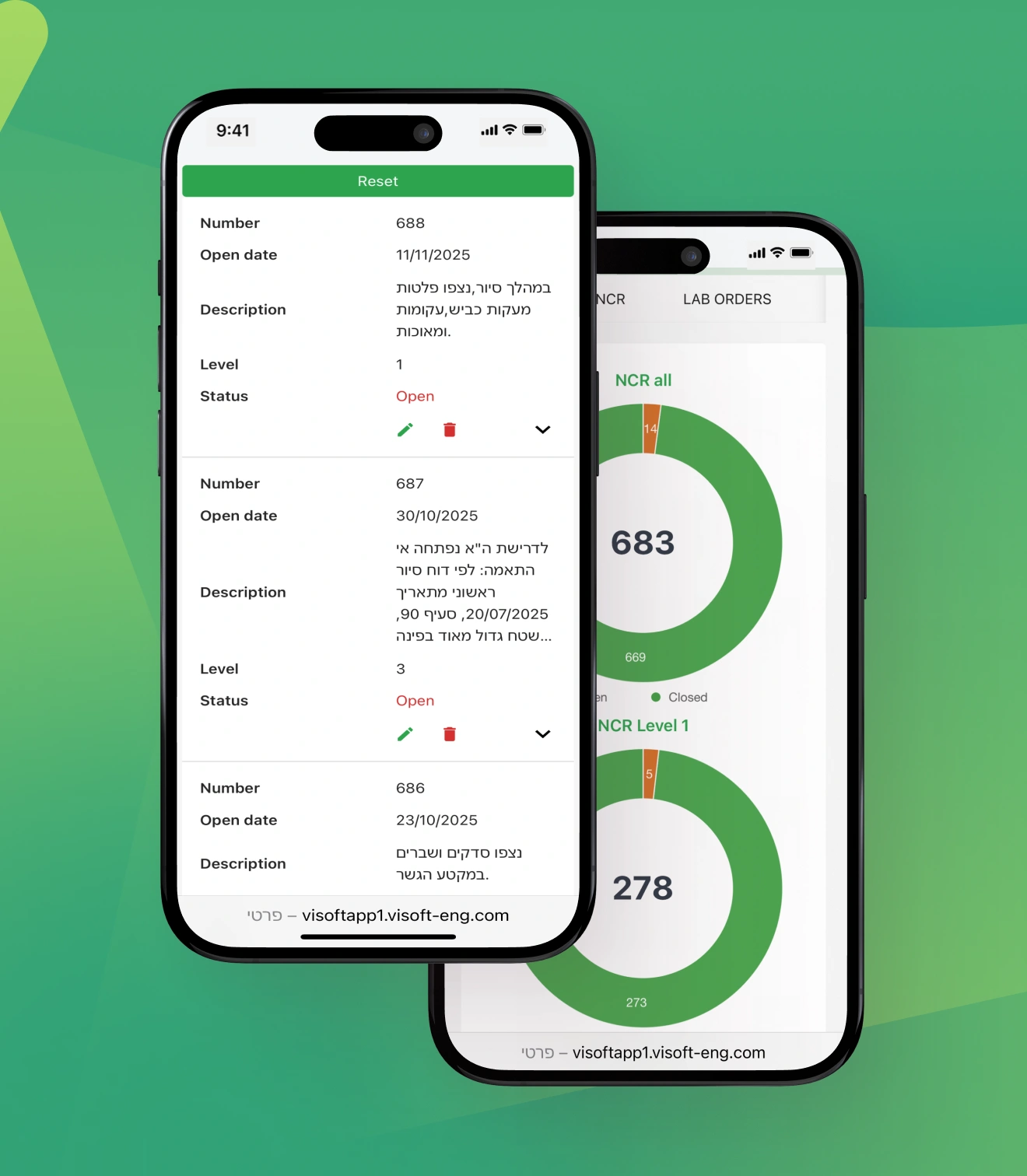
- Interactive reports on mobile and the web
- Automatic alerts for lab tests, deviations, or defects
- Full connection to an online system for control and quality assurance
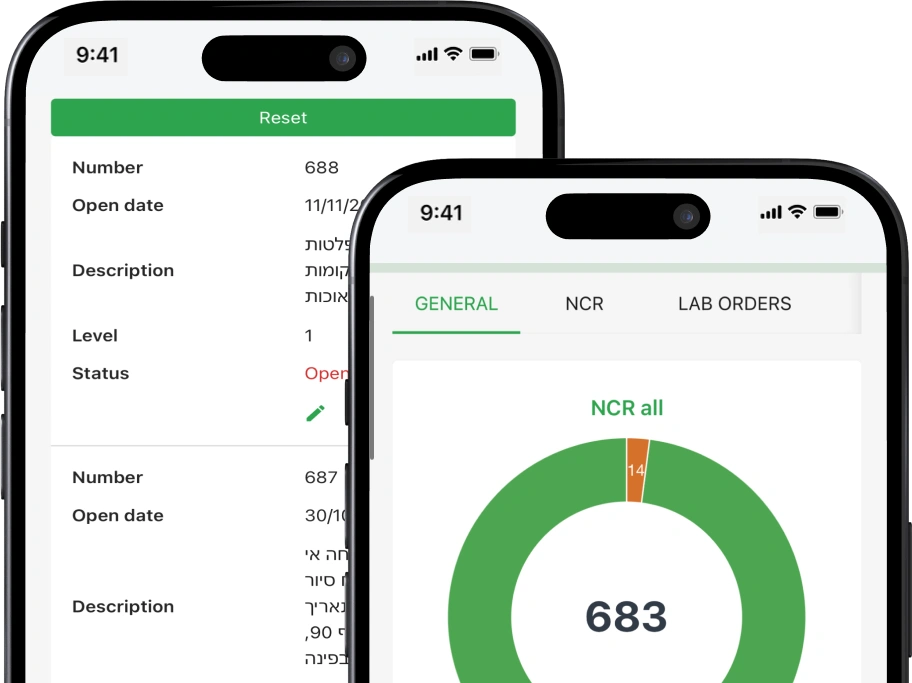
- Advanced analysis with graphs, KPIs, and smart dashboards
Organizations that adopt this method find that the project is not only more controlled – it is also more efficient, more economical, and more focused on results.
In conclusion
Reports and analysis are much more than numbers on paper.
They are a strategic tool for project management, providing control, transparency, and continuous improvement.
When combined with quality control and assurance and an online quality control and assurance system, managers can make data-driven decisions, prevent problems, and manage projects in a smarter, more efficient, and more successful way.
Vi-Soft is a leading software house that has been providing technological solutions to the construction and infrastructure industry for over 10 years.
We are proud of our team of engineers, consultants, developers, software testers, and product managers – all focused on one thing: providing the right solution for every project.
Want to see how it works in practice? Fill out the form and we will be happy to give you a personal demonstration.
what our customers say
Real experience speaks louder than anything else. Read authentic feedback from professionals who work with our system every day and see the value it brings to their projects.
other services
our clients