




Content in collaboration with Vi-Soft
How one person is leading a revolution in quality control through technology and a deep understanding of the pain — an interview with Sergey Gendlin on the future of quality control, which is already right here.
The construction industry in Israel and around the world constantly faces the need to become more precise, more professional, and as free as possible from execution errors. In the developer’s or contractor’s office sit people with the right professional education and every advanced management tool and software available — but the direct impact on project execution quality is in the hands of the workers and site managers in the field. That is exactly why quality control exists: so the contractor can make sure work on the construction site runs as efficiently as possible and exactly according to the plans.
ROI in quality control is measured both in direct savings in manpower and management time, and through what is prevented — how much rework was avoided, how many delays were prevented, and even how much legal risk was reduced. Because a construction site leaves so much room for mistakes, the return on investment in quality control is very fast.
Most solutions used in the field today for quality control are aids for managing paperwork. That turns them into a mechanism whose main substance is filling out checklists — tools that are not a real, convenient, contractor-oriented aid, and therefore do not meaningfully help save money or prevent failures.
When Sergey Gendlin — today CEO of Vi-Soft, a company that has been operating for more than 10 years and has led more than 600 projects — began his career as an engineer in the high-tech industry, he probably never imagined that one day he would lead a technological revolution in construction and infrastructure in Israel. The combination of his engineering and technological background with a deep familiarity with the industry’s challenges led him to identify real problems and develop practical solutions for them. That is how Vi-Soft was born: a project management and quality control system developed from the real needs of the industry, which over the years became one of Israel’s leading platforms in the field.
“Before founding Vi-Soft, I spent years developing and implementing technologies in different organizations, working closely with customers and complex business processes,” Gendlin recalls of the earlier stage of his professional path, outside the construction industry. “Along the way I learned that technology itself is not the goal, but a tool for solving real problems. That experience shaped my worldview: first understand the pain, the process, and the people who carry it out — and only then build a technological solution. That approach still guides every decision we make in the company today.”
The very fact that Gendlin came into construction from the outside allowed him to look at the industry with fresh eyes. To his surprise, he discovered a sector that fascinated him — one that manages projects of enormous scale, with enormous responsibility and a direct impact on everyone’s lives, yet still struggles with manual processes, information gaps, and difficulties in management and control.
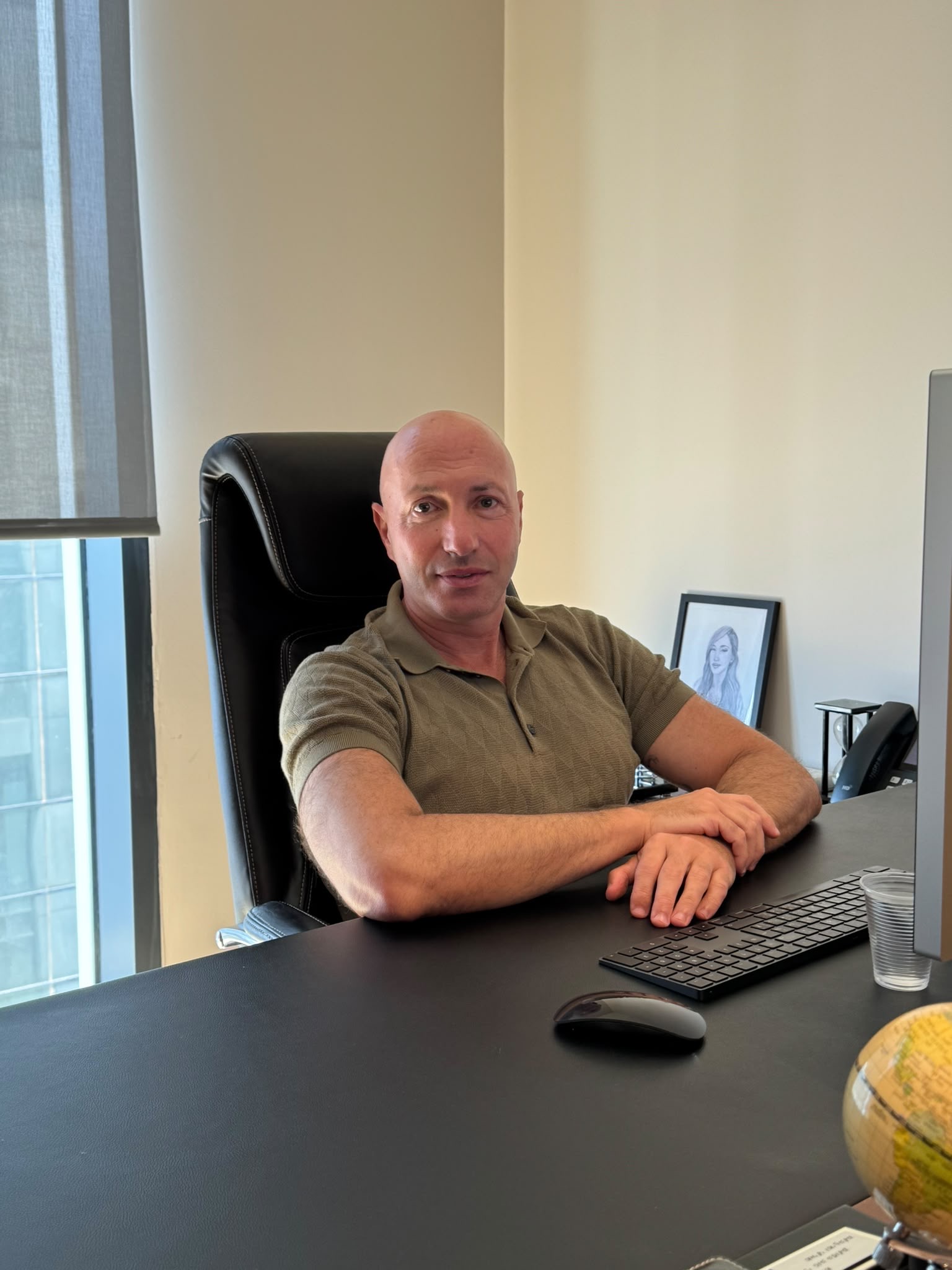
Gendlin decided to take deep engineering knowledge from the field and translate it into an advanced digital platform. “What drew me was the potential. I saw an industry full of excellent professionals, but also an enormous opportunity to improve processes through technology. I understood that if we could properly connect the field with the digital world, we could create real change.”
And real change is undoubtedly needed. Although there are no official uniform figures in Israel, when you combine local market data with global research the picture is very clear — and painful: execution errors, lack of coordination, and poor work planning are among the largest drivers of loss in the industry. The overall picture based on international studies shows that 5% to 15% of project cost is lost because of mistakes, rework, and quality defects. In complex projects, or ones that are not managed well enough, that can exceed 20%. And that does not even include delay penalties, reputational damage, the cost of legal disputes, and financing costs caused by delays.
“Again and again I heard about defects discovered too late, about information scattered across different parties, and about precious time wasted trying to understand what was really happening on site. I realized the problem was not a lack of professionalism or good intentions, but the absence of tools that allow everyone to work from a single, available, up-to-date source of information. That was when it clicked that things could — and should — be done differently. From that moment, moving from identifying the problem to building the solution felt almost natural.”
Was there a specific moment in your career when you realized there was a deep problem that required a new solution?
“Yes. The defining moment was when I was exposed to the ‘quality control file’ of a large infrastructure project. I saw enormous amounts of paperwork, manual stamps, and scattered documentation. I understood the problem was not that there was no information — it simply was not accessible. At the moment of truth, when you need to make a decision or locate a fault, the information is buried. That is when I understood we needed a system that manages information, not just stores it.”
Gendlin’s conclusion was that the problem is not a lack of inspections — it is a lack of management of those inspections. There are processes and standards, but no system that connects everything together in a smart, consistent, real-time way. The insight was that you need a system that manages the flow of quality, not only documents it.
Gendlin breaks the problem down: “The money leaks in three main places: rework, delays, and lack of control. When work is carried out without timely quality approval, or a deviation in the field is missed — the late fix costs many times more. That can mean dismantling elements, reordering materials, and delaying the entire chain. Vi-Soft stops that with ‘quality gates’ that ensure you do not advance a stage without proper approval.”
Yet the industry still works with outdated methods, and introducing technology is a challenge. As with any initiative that seeks to change habits in a traditional sector, Gendlin also encountered skepticism. “Some people asked whether field teams would adopt a digital system, whether deeply rooted work processes could be changed, and whether the technology would really create value on site — not only in the office. I think those questions were legitimate and even important, because they forced us to refine the solution. On the other hand, from the beginning I believed the need was there. I may not have been able to predict everything we would achieve along the way, but it was clear to me that the industry had reached a point where the move to digital quality management and control was not a question of ‘if,’ but of ‘when.’ That is why the focus in designing the platform was a simple user experience and immediate value — so that site managers using it would immediately see that it saves them time and prevents mistakes, and therefore adopt it into their working method.”
Why wouldn’t people adopt a quality control method? What are construction industry managers missing when they think about quality control?
“They see it as a cost center. In practice, it is a risk-management and profit system. Control over quality is control over schedules and budget. Quality data is the most critical data for managing a project. Anyone who does not use it correctly is simply managing with their eyes closed. That is an organizational culture problem, but one that is solved through the right technology. You cannot change people with slogans — only with a tool that truly makes their lives easier. The moment the system saves time and creates order — it changes behavior. From there, organizational culture aligns on its own.”
For Gendlin, the key is simplicity. The interface is tailored for field teams, works even without reception, and requires a minimum number of actions. Instead of adding work — it reduces it. Reports are generated automatically, processes are shortened, and employees feel the change immediately.
After more than 10 years of activity, 600 projects, and more than 4,000 users, what have you learned about the construction industry that others still do not understand?
“We learned that the real challenge is not a lack of professional knowledge. The construction industry is full of excellent people. The challenge is managing knowledge and information in real time. As projects grow and become more complex, so does the need for systems that make it possible to make decisions based on accurate, up-to-date, and accessible information. Whoever controls the information — controls the project.”
And what is the most significant change that happens in the field after the system is implemented?
“The shift from reaction to prevention. Instead of discovering problems after the fact — you identify them in real time. In addition, there is full transparency: everyone knows the status, what was approved, and what is stuck. That completely changes the pace of decision-making.”
Indeed, Vi-Soft is a system that ensures everything that needs to be checked is actually checked, documented, and approved on time. It turns quality control from a chaotic process into a precise, transparent, and controlled management system. Based on high-quality information, it becomes possible to analyze the state of the project in a more grounded way, and decisions become useful — made in real time to prevent mistakes, rather than after the fact and from a position of loss.
Vi-Soft’s solution, Gendlin assures, is more advanced and stable than the alternatives because its DNA is engineering. While most solutions on the market today are generic form-management tools, Vi-Soft built a system that understands projects in terms of hierarchy, dependencies between stages, and engineering logic — a system tested on the most complex projects, in places where there is no room for error.
So to summarize: if I am a developer or contractor, why should I invest in this? What do I get at the end of the day?
“Three clear things: saving money, shortening schedules, and legal protection. You get a project with full documentation and the ability to prove every decision that was made. Companies that do not adopt this kind of technology will simply lose competitiveness. Projects will become more complex, requirements will rise, and the ability to work manually will no longer be enough. Those who do not become more efficient — will be left behind.”
Looking ahead, Gendlin dreams of an even more technological construction industry. For him, Vi-Soft will be an important part of that revolution. Vi-Soft wants to become the digital standard of the industry — to lead the shift from passive control to smart, data- and AI-based quality management, with growing use of automation focused on anomaly detection, data analysis, and recommendations.
“The goal is not only to manage projects,” Gendlin concludes, “but to change the way we build.”
And when you look today at Vi-Soft, at the projects it takes part in, and at the product itself — what are you most proud of, not as CEO, but as the person who led this from day one?
“My greatest pride is seeing that a system that has been operating for more than 10 years is no longer perceived as software, but as a real working tool for thousands of professionals. When a project manager, supervisor, contractor, or developer tells us that information is available to them in real time, that defects are handled faster, and that they have better control over the project — I know we have created real value. Including participation in some of the most complex projects in Israel, such as the Red Line of the light rail in Gush Dan, and today also the Green Line, as well as hundreds of projects across the country.
Beyond the technology, I am proud that we built a company that is connected to the field and listens to its customers. Vi-Soft grew out of a real need, and it continues to evolve together with the industry. For me, that is the greatest success — knowing we managed to connect people, processes, and technology in a way that improves the quality of construction in Israel.”