


Content in collaboration with Vi-Soft
Case Study: How Vi-Soft Became an Essential Tool in the Glilot East Interchange Project.
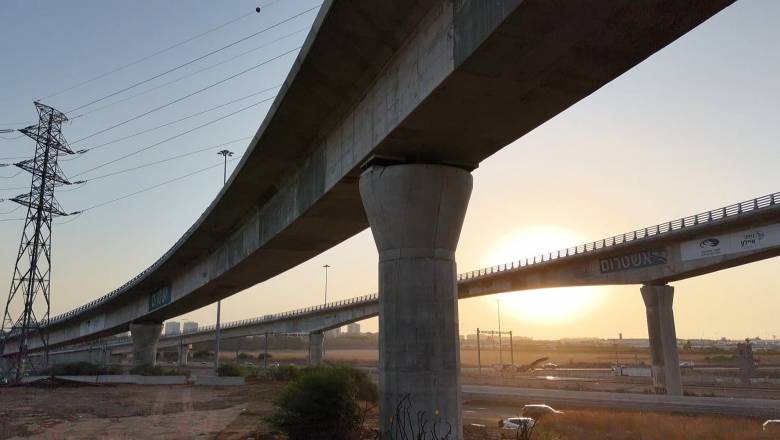
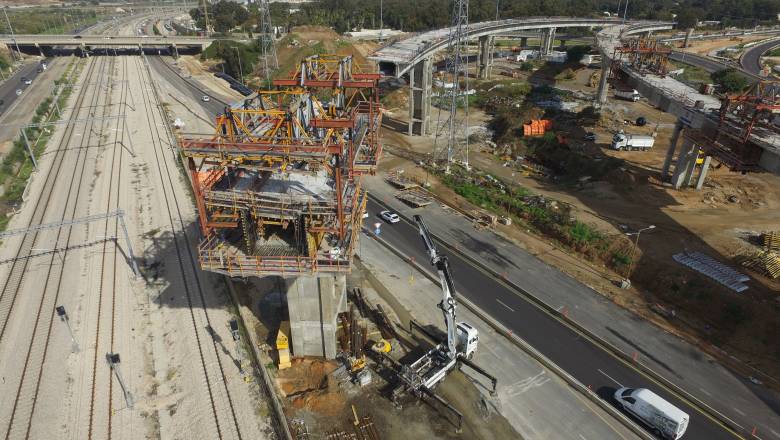
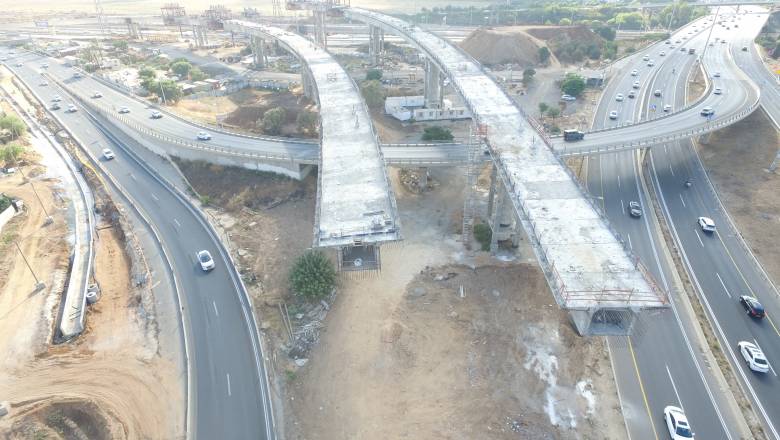
Between the giant highways of the center of the country, over the railway tracks and under the winding bridges, one of the largest transportation projects in Israel is being built: Section 3 of the “Highway” project of the Ayalon Highways Company , in the section between Tel Aviv and Herzliya. The project, led by Ashtrom and quality managed by Port Engineers , is a bridging and infrastructure project. A project approximately 14 km long that includes two bridges, with a cumulative length of 1.5 km. This is the longest road bridge in the State of Israel. The project is carrying out bridging work using the balanced cantilever method, which includes casting on site. The bridges pass over railway tracks, over the Ayalon Highways and over an existing bridge. The project includes numerous concrete structures such as retaining walls, overpasses, a top-down wall of approximately 1000 ground anchors, as well as numerous wet and dry infrastructures. The project included a large number of traffic arrangements to facilitate the work while maintaining the busy activity of a highway in the center of the Dan Bloc.
About the project
- Company Name : Port Engineers
- Project Name : Expressways Section 3, Glilot Interchange East
- Client : Ayalon Highways
- Main Contractor : Ashtrom
- Project start : 06.2020
- Project completion expected : Mid-2026
- Location : Glilot Interchange East, Ayalon Highway from the JNF Interchange to the Herzliya Interchange. Highway 5 from the Kfar Hayrok Interchange to the Glilot Interchange
- Project budget : approximately 500 million
- Quality Control Team : At its peak, it consisted of 7 quality engineers.
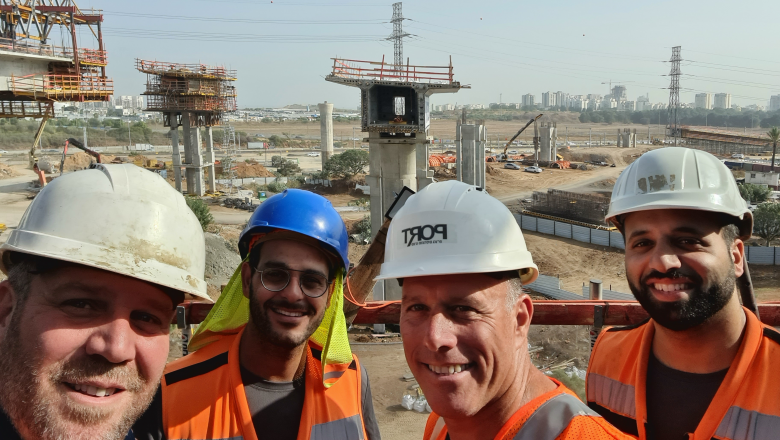
The management of quality control on the project is entrusted to Assaf Lior and Daniel Catalan , the control managers on behalf of Port Engineers. The central and important tool through which Assaf and his team conduct and manage quality control on the project throughout the execution stages is Vi-Soft , a digital quality management system. “Our ability to present accurate status in real time, produce reports at the click of a button and track dozens of processes simultaneously – all of this happens thanks to the system,” says Assaf.
Vi-Soft enters the field already at the start-up stage
Even during the initial planning stage of the project, it was decided to implement Vi-Soft . During the project launch and to determine the scope of the work, the team, which had to manage quality control across dozens of structures, disciplines and suppliers, built a detailed project tree within the system – describing every stage and every task, from the ground up to completion: buildings, roads, infrastructure and bridges.
The project tree describes the stages of execution for each element/structure separately and contains all the works in the order of their operations: excavation, foundation soil, dirt and paving, foundation, steel, tamping and grouting, concrete cast on site using various methods for various elements, various sealing works, electricity and systems, etc. All the works were taken into account in order to create a clear order for the quality control team, quality assurance, supervision management and of course the main contractor, who will receive the status of the works, defects by work, and the functioning of the contractor and quality control team.
The system is built to provide a solution during the startup and organization stages so that it allows the quality control team to begin work immediately. The contractor’s project manager and the CEO of the inspection company allowed the quality control manager adequate time to learn and build a comprehensive foundation. According to Lior, “The goal was to create a clear and accessible structure for all parties – quality control, supervision, contractor, client. Even without an in-depth technical background, you can immediately see the status of the work, where there are defects, and where each team stands.”
How did the system implementation in the project proceed?
“When the project started in 2020, the system had just moved to a new edition, so at first there were some gaps between the versions. But with close guidance and professional response, we were able to complete the transition smoothly. At the same time, there were also challenges in collecting information from suppliers and contractors, but that is already part of the ongoing work.”
Today, Vi-Soft accompanies all stages of the project – from start-up, through preliminary and ongoing control, to the preparation of quality files. The team uses it not only to track tasks, but also as a central documentation tool for displaying laboratory and measurement certificates at the touch of a button and tracking and handling defects (NCR). The software also allows access to all project documents for engineers, supervisors and the project manager, and also allows remote functioning with the laboratory.
“It’s a system that centralizes everything. There’s no need for binders, Excel tables, or searching through folders. Even during tours with the client’s representatives, I presented measurements, designer responses, and relevant certificates within seconds. It saves time and gives a sense of control.”
When asked whether the system actually prevented malfunctions in the field, Lior answered honestly: “A system does not physically prevent malfunctions, that is not its role. But it significantly improved processes. In an event where a debate arose regarding the quality of execution, I was able to immediately make all the relevant information available – and that settled the debate.”
How did you measure the impact of the system?
“There was a significant improvement in customer satisfaction, mainly thanks to the presentation of an up-to-date status and organized follow-up after handling defects. The project delivery process also became simpler and more efficient.”
Alongside this, Asaf wants to emphasize that the system’s impact did not only help at points of contact with the client – handling defects and delivery, which constitute a kind of end points of the project phases. The system’s contribution is not only felt at the endpoints, but also in the ongoing work. Whether in managing quality documents in an organized and automatic manner. Or presenting laboratory certificates and consultant reports in a consolidated and clear manner. “I can monitor the performance of each laboratory remotely. It’s a work tool, not a ‘paper’ management system.”
What will the future look like?
Lior concludes optimistically: “In addition to other projects we manage in the Vi-Soft system , we definitely see the system being integrated into future projects as well. It gives us an advantage in management, reports, and transparency with all stakeholders.”
The Vi-Soft system does not replace professionals – it simply helps them work properly. In an organization that manages a massive and complex construction and needs to supervise and manage the production and execution of hundreds of elements and coordinate the work of dozens of subcontractors – digital quality management is not a nice addition, but a necessary component for success.